Introduction
It usually starts with a small puddle.
A little oil under the machine. Maybe a slight hesitation when the arm lifts. Easy to ignore – until it isn’t.
Hydraulic cylinders are the muscle behind some of the hardest-working machines on the planet: excavators tearing through rock, cranes hoisting steel beams, dump trucks hauling tons of earth. They don’t ask for much. But when they do start asking, you’d better listen.
This guide is for the people who actually deal with it – operators, maintenance crews, and workshop owners – written in plain language, not a parts catalog.
What Is a Hydraulic Cylinder?
A hydraulic cylinder is essentially a steel tube with a rod inside it. Pressurized hydraulic fluid pushes that rod in and out, creating the force that moves your equipment.
Key Components:
- Cylinder barrel
- Piston
- Rod
- End caps
- Seals (most failure-prone part)
Simple in principle. Brutally unforgiving when something goes wrong.
Why Hydraulic Cylinders Fail (And It’s Usually Preventable)
Most failures don’t happen suddenly – they build over time. Here are the most common causes:
1. Worn Seals
Seals degrade due to heat, pressure, and chemical exposure. Once they fail, leaks begin and performance drops.
2. Rod Scoring
Small scratches or gouges damage seals quickly. Usually caused by contamination or poor lubrication.
3. Bent Rods
Overloading or impact can bend the rod, causing uneven movement and internal stress.
4. Contamination
Dirt, dust, and metal particles act like sandpaper inside the system. Clean hydraulic fluid is critical.
Warning Signs You Should Never Ignore
Your hydraulic cylinder will show signs before complete failure:
- Reduced power – Struggling with normal loads
- Oil leaks – No leak is “minor.”
- Jerky movement – Indicates internal damage
- Strange noises – Knocking or grinding sounds
- Slow response – Delay in operation
Inspect cylinders every 250-500 operating hours to avoid major breakdowns.
What Hydraulic Cylinder Repair Actually Involves
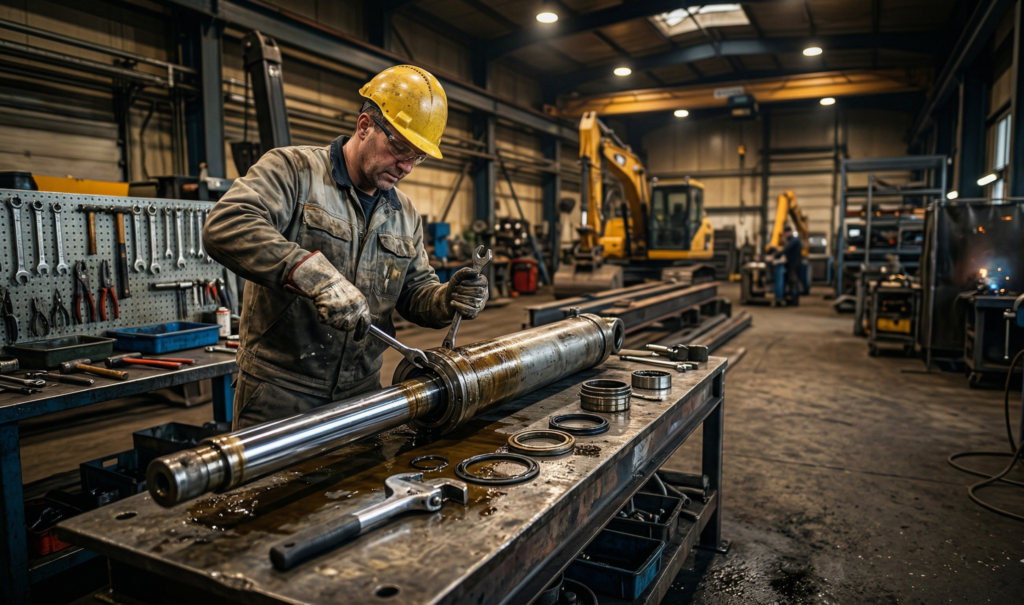
When you send a cylinder for repair, here’s what a professional process looks like:
1. Disassembly
Careful dismantling using specialized tools to avoid further damage.
2. Inspection
Each component is checked for wear, cracks, and deformation.
3. Cleaning
Industrial cleaning removes oil, dirt, and contaminants.
4. Repair or Replacement
- Minor damage → repaired
- Severe damage → replaced
5. Honing the Barrel
A critical step that smooths the internal surface for better sealing and longer life.
6. Reassembly & Testing
The cylinder is rebuilt and pressure-tested to ensure:
- No leaks
- Smooth operation
- Proper alignment
Repair vs Replacement: What Should You Choose?
There’s no one-size-fits-all answer, but here’s a practical guide:
Choose Repair When:
- Structure is still strong
- Damage is minor (seals, rod surface)
- Cost is less than ~60% of the replacement cost
Choose Replacement When:
- The barrel is cracked or heavily damaged
- Frequent failures occur
- Maintenance costs are too high
Always get a second opinion from a trusted repair shop.
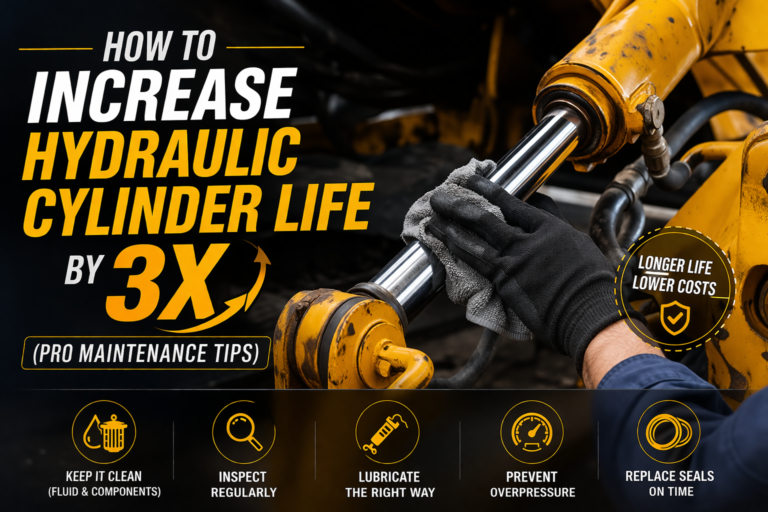
Preventive Maintenance Tips That Actually Work
The best repair is the one you never need.
Follow These Simple Practices:
- Use clean hydraulic oil
- Avoid overloading equipment
- Replace seals before failure
- Store cylinders properly
- Perform regular inspections
Small habits = big savings.
Conclusion
Hydraulic cylinders are built to handle tough jobs – but they’re not indestructible.
Equipment owners who stay proactive with inspections and maintenance spend far less on repairs and downtime.
If your cylinder is already showing warning signs, don’t wait. What seems like a small issue today can turn into a complete failure tomorrow.
About Fixomech
At Fixomech, we design and manufacture advanced tools for hydraulic cylinder repair, including:
- Cylinder honing machines
- Heavy-duty repair equipment
- Precision maintenance solutions
Built for professionals who need reliability, speed, and accuracy – because downtime is expensive, and the right tools make all the difference.
Frequently Asked Question(FAQ)
Common causes include seal wear, contamination, overloading, and lack of maintenance.
It can take anywhere from a few hours to several days, depending on the damage.
Yes, most cylinders can be repaired unless there is severe structural damage.
Tools like honing machines, torque wrenches, and seal kits are essential.
Regular maintenance, proper lubrication, and avoiding overloading can significantly extend lifespan.
The repair process includes disassembly, inspection, cleaning, replacing damaged parts, honing, reassembly, and pressure testing.
Yes, leaking cylinders can be repaired by replacing worn seals and fixing damaged components.
Repair time ranges from a few hours to 2–3 days, depending on the severity of damage.
Common tools include cylinder honing machines, torque wrenches, seal kits, and heavy-duty nut busters.
Regular inspection, clean hydraulic fluid, proper lubrication, and timely seal replacement help maintain performance.
Delayed repair can lead to complete equipment failure, higher costs, and safety risks.