Explore Expert Hydraulic Cylinder Maintenance Tips
If your equipment is facing frequent breakdowns, oil leaks, or reduced efficiency, the root cause is often poor hydraulic cylinder maintenance.
Hydraulic cylinders play a critical role in heavy machinery used across industries like construction, mining, agriculture, and manufacturing. These components handle immense pressure and workload daily, making them prone to wear and tear if not properly maintained.
In this guide, you’ll learn how to increase hydraulic cylinder life by up to 3X using expert maintenance tips, practical strategies, and industry-proven methods.
Why Hydraulic Cylinder Maintenance Is Important
Hydraulic cylinders operate under high pressure, extreme temperatures, and harsh environmental conditions. Without proper care, they can fail much earlier than expected.
Common Problems Caused by Poor Maintenance:
- Seal damage and oil leakage
- Cylinder rod scratches and corrosion
- Internal wear due to contamination
- Reduced performance and efficiency
Studies show that over 70% of hydraulic failures are caused by contamination and poor maintenance practices.
Proper maintenance not only increases lifespan but also:
✔ Reduces downtime
✔ Improves machine efficiency
✔ Lowers repair costs
✔ Enhances safety
Top 10 Pro Tips to Increase Hydraulic Cylinder Life
1. Use the Right Hydraulic Oil
The foundation of a healthy hydraulic system is high-quality oil.
Using incorrect or low-quality oil can lead to:
- Increased friction
- Overheating
- Internal damage
Best Practices:
- Follow manufacturer-recommended oil specifications
- Maintain proper viscosity levels
- Avoid mixing different oil types
Clean and high-quality oil significantly improves cylinder performance and durability.
2. Prevent Oil Contamination (Most Critical Factor)
Contamination is the number one reason for hydraulic cylinder failure.
Types of Contaminants:
- Dust and dirt particles
- Water or moisture
- Metal debris from wear
How to Prevent It:
- Install high-efficiency filters
- Replace filters regularly
- Keep the system sealed
- Check oil cleanliness frequently
Even small particles can cause severe internal damage over time.
3. Perform Regular Inspection & Preventive Maintenance
Routine inspections help identify issues before they turn into major failures.
What to Check:
- Oil leaks around seals
- Rod surface condition
- Cylinder alignment
- Noise and vibration levels
Maintenance Schedule:
- Daily: Visual inspection
- Weekly: Performance checks
- Monthly: Detailed inspection
Preventive maintenance can extend cylinder life by 2–3 times.
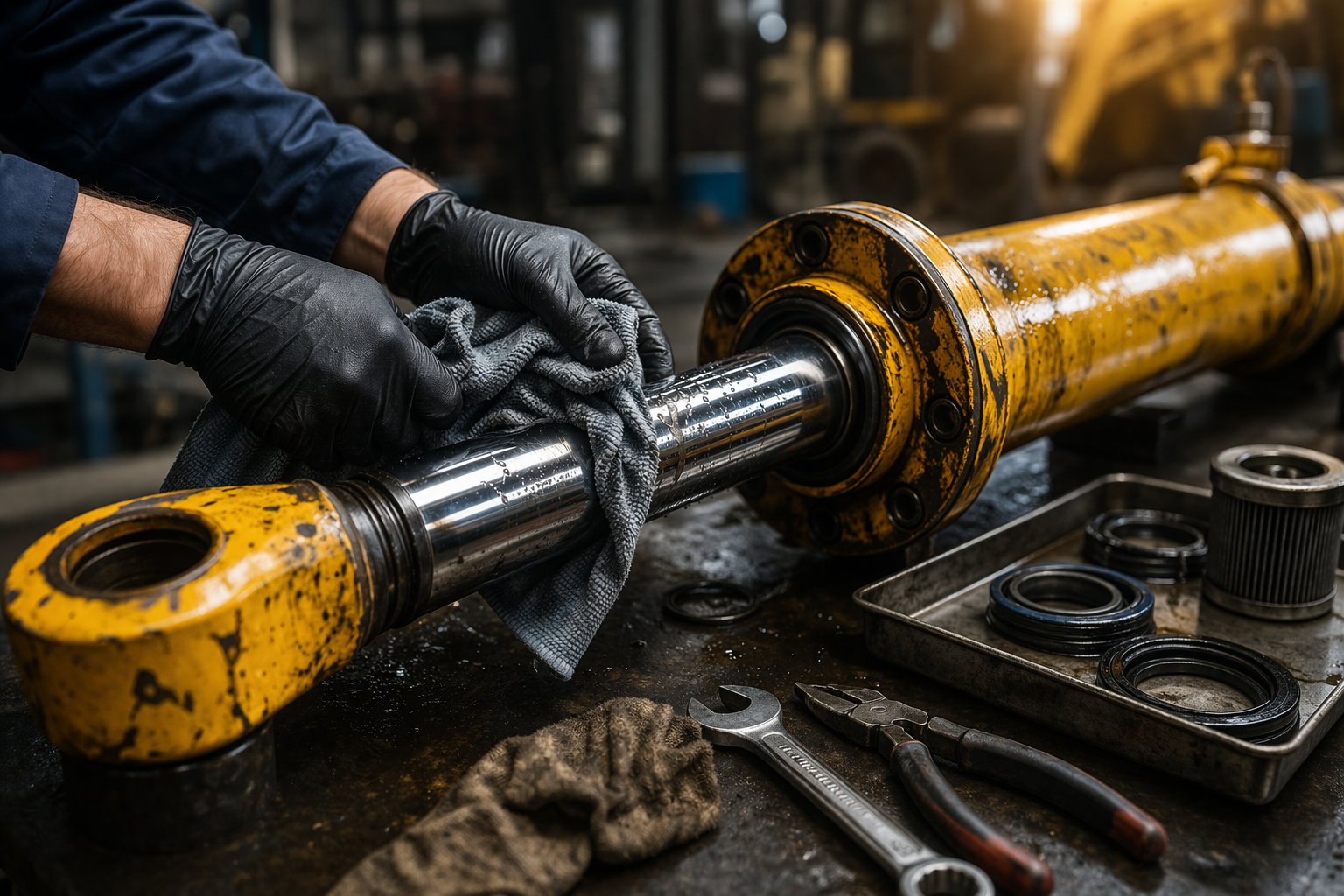
4. Protect the Cylinder Rod from Damage
The cylinder rod is exposed to external conditions, making it vulnerable to damage.
Tips to Protect It:
- Use protective covers or boots
- Clean rods after the operation
- Avoid exposure to corrosive environments
Even minor scratches can destroy seals and lead to leakage.
5. Ensure Proper Alignment
Misalignment is a hidden but serious issue.
Problems Caused by Misalignment:
- Uneven wear
- Seal failure
- Reduced efficiency
Solution:
- Ensure correct installation
- Check mounting points
- Maintain balanced load distribution
6. Control Operating Temperature
Heat is a silent killer of hydraulic systems.
Effects of High Temperature:
- Oil degradation
- Seal damage
- Reduced lubrication efficiency
Ideal Temperature Range:
40°C to 60°C
How to Maintain It:
- Use cooling systems
- Avoid overloading machinery
- Monitor temperature regularly
7. Replace Seals Before They Fail
Seals naturally wear out over time, even if there are no visible signs.
Pro Tip:
- Replace seals during scheduled maintenance
- Always use high-quality seal kits
Preventive seal replacement avoids sudden breakdowns and costly repairs.
8. Train Equipment Operators
Operator behavior directly impacts hydraulic cylinder life.
Common Operator Mistakes:
- Overloading equipment
- Sudden pressure changes
- Improper handling
Well-trained operators can significantly reduce wear and tear.
9. Monitor System Pressure
Incorrect pressure settings can damage the cylinder internally.
Best Practices:
- Maintain recommended pressure levels
- Avoid sudden pressure spikes
- Use pressure monitoring tools
10. Store Equipment Properly
Improper storage can lead to corrosion and contamination.
Storage Tips:
- Keep cylinders in a dry, clean area
- Use protective coatings
- Cover exposed parts
Warning Signs of Hydraulic Cylinder Failure
Ignoring early warning signs can lead to complete system failure.
Watch for:
- Oil leakage
- Jerky or uneven movement
- Reduced power output
- Unusual noises
Address these issues immediately to prevent costly downtime.
Advanced Maintenance Tips Used by Experts
Want to go beyond basic maintenance? Here are expert-level strategies:
- Use condition monitoring systems
- Conduct oil analysis regularly
- Maintain proper lubrication schedules
- Use OEM parts instead of low-quality alternatives
These practices are widely used in large-scale industries to maximize equipment lifespan.
Frequently Asked Questions (FAQs)
You can increase hydraulic cylinder life by maintaining clean oil, performing regular inspections, ensuring proper alignment, and replacing seals on time.
The main causes include oil contamination, poor maintenance, seal wear, and overheating.
Basic inspections should be done daily, while detailed maintenance should be performed every 3-6 months.
The ideal operating temperature is between 40°C and 60°C.
Contaminated oil causes internal wear, reduces efficiency, and can lead to complete system failure.
The average lifespan of a hydraulic cylinder depends on usage, maintenance, and operating conditions. In heavy equipment, a well-maintained cylinder can last 5 to 10 years or more, while poor maintenance can reduce its life significantly.
Internal damage can be difficult to detect, but common signs include:
Loss of pressure
Slow or uneven movement
Overheating
Reduced lifting capacity
Regular testing and inspection help identify internal issues early.
A hydraulic cylinder should be:
Repaired if the issue is minor (seal damage, small leaks)
Replaced if there is major damage (bent rod, deep scoring, severe corrosion)
Timely repair can save costs, but ignoring damage may lead to complete replacement.